
The Biggest Misconception About Real Estate Photography
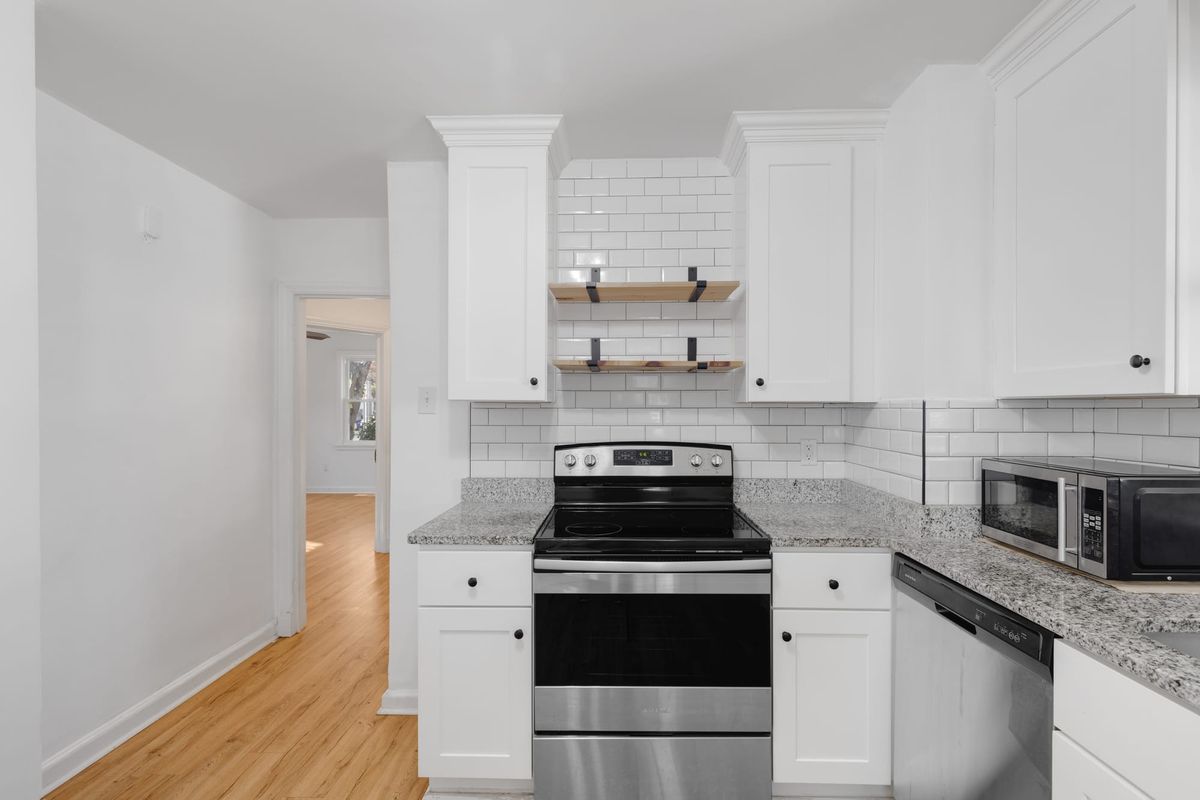
Real estate photography suffers from a strange reputation problem.
From the outside, it often looks simple.
Walk into a house.
Take a few pictures.
Deliver the files.
Easy, right?
And that perception fuels the single biggest misconception about REP:
“It’s just taking photos of rooms.”
This assumption is exactly why so many beginners underestimate the industry — and why so many photographers initially dismiss it.
Because real estate photography is not about casually photographing spaces.
It’s about precision.
It’s about control.
It’s about solving visual problems in environments that are deceptively technical.
A room is not just a room.
It’s mixed lighting sources.
Window exposures.
Perspective distortion.
Dynamic range challenges.
Color balance inconsistencies.
Compositional decisions.
Bright windows vs. darker interiors.
Vertical lines that must remain straight.
Wide-angle distortion that must be managed.
Lighting that must feel natural but polished.
Every frame is a technical balancing act.
Unlike many creative niches where stylistic interpretation dominates, REP has a very unforgiving standard of “correct.” Walls cannot lean. Colors cannot drift wildly. Shadows cannot swallow detail. Highlights cannot blow out uncontrollably.
Images must feel clean, bright, and accurate.
Consistently.
And consistency is where the real difficulty lives.
It’s not hard to take a decent photo of a room once.
It’s hard to produce technically correct images across dozens — then hundreds — of properties with different layouts, lighting conditions, architectural quirks, and challenges.
Over and over.
Under deadlines.
Beyond the technical side, there’s another misunderstanding.
Some photographers assume REP lacks creativity.
But creativity in this field is simply expressed differently. It lives in problem-solving, composition refinement, lighting decisions, workflow optimization, and efficiency mastery.
It’s structured creativity.
Not artistic improvisation.
Perhaps most ironically, the belief that REP is “easy” is often what drives people out of the industry early. The gap between expectation and reality catches them off guard.
What looked simple reveals complexity.
What looked basic reveals precision.
What looked mechanical reveals skill.
Real estate photography is approachable — but not trivial.
And understanding that distinction is often the dividing line between those who treat it casually…
And those who build serious businesses from it.
So many people are interested in real estate photography but don’t know where to start —
When I first tried to learn, I kept quitting because nothing was clicking. Once I had proper training, everything finally made sense. That experience is what led me to create this guide.
Not everyone can invest in mentorship, so I took everything I learned and broke it down into a simple, affordable Canva presentation. It’s designed to show you exactly what to do, step by step, so you can understand the skill, feel confident, and start booking clients as quickly as possible.
So many people are interested in real estate photography but don’t know where to start —
What other people have said about the guide:
✩ Easy to follow along
✩ Everything is laid out in a clear, digestible way.
✩ The guide didn’t overwhelm me with jargon or unnecessary details, just straightforward, practical information.
✩ This guide was really affordable and super valuable. After reading through it, I felt ready to jump right into real estate photography with the knowledge I needed.
✩ Anyone that wants to take themselves seriously as a real estate photographer shouldn't hesitate to invest in their business with this guide!
✩ This guide has been SO helpful in learning the ins and outs of real estate photography! It’s a great investment for what’s inside. This guide simplified some things that I thought would be complicated.