
How to practice real estate photography without clients & build your portfolio
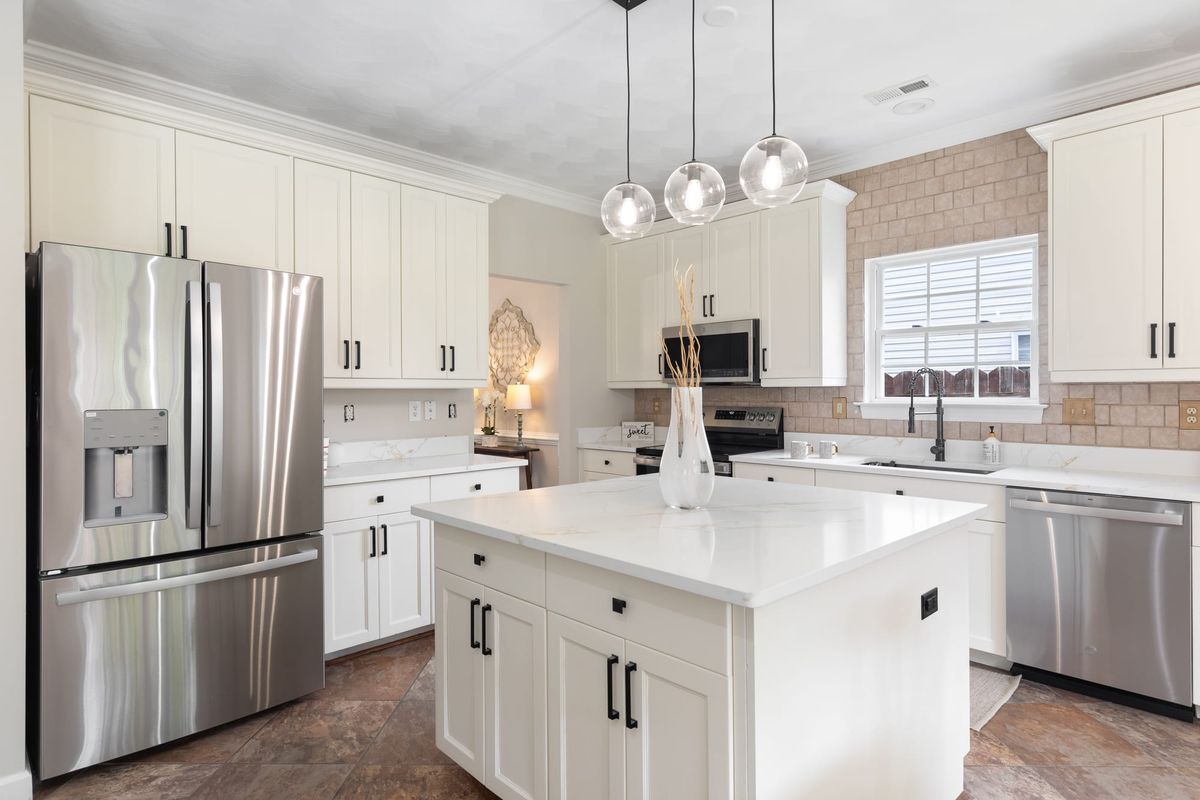
Breaking into real estate photography feels “simple but overwhelming” at the same time — simple because the work itself is so doable, but overwhelming because you need a portfolio before anyone will hire you.
(Btw if you need help on how to start real estate photography step-by-step.. Check out my guide!! <3 It will walk your through what you need to know.)
Here’s the good news: you do not need paid clients to start practicing, improving, or building a beautiful portfolio.
You can create your entire proof-of-concept before ever booking your first appointment.
Here’s exactly how to do it.
1. Practice in Your Own Home First
Before you worry about modeling or finding fancy properties, practice where you are.
What to focus on:
- Composition — wide shots, corner shots, straight-on angles
- Camera height — typically 4–5 feet for interiors
- Level horizons — avoid tilted lines
- Shooting in brackets for HDR
- Keeping verticals straight
- Learning how light moves through a room
- Editing with consistency
Your home is a free classroom. Treat it like a mock listing.
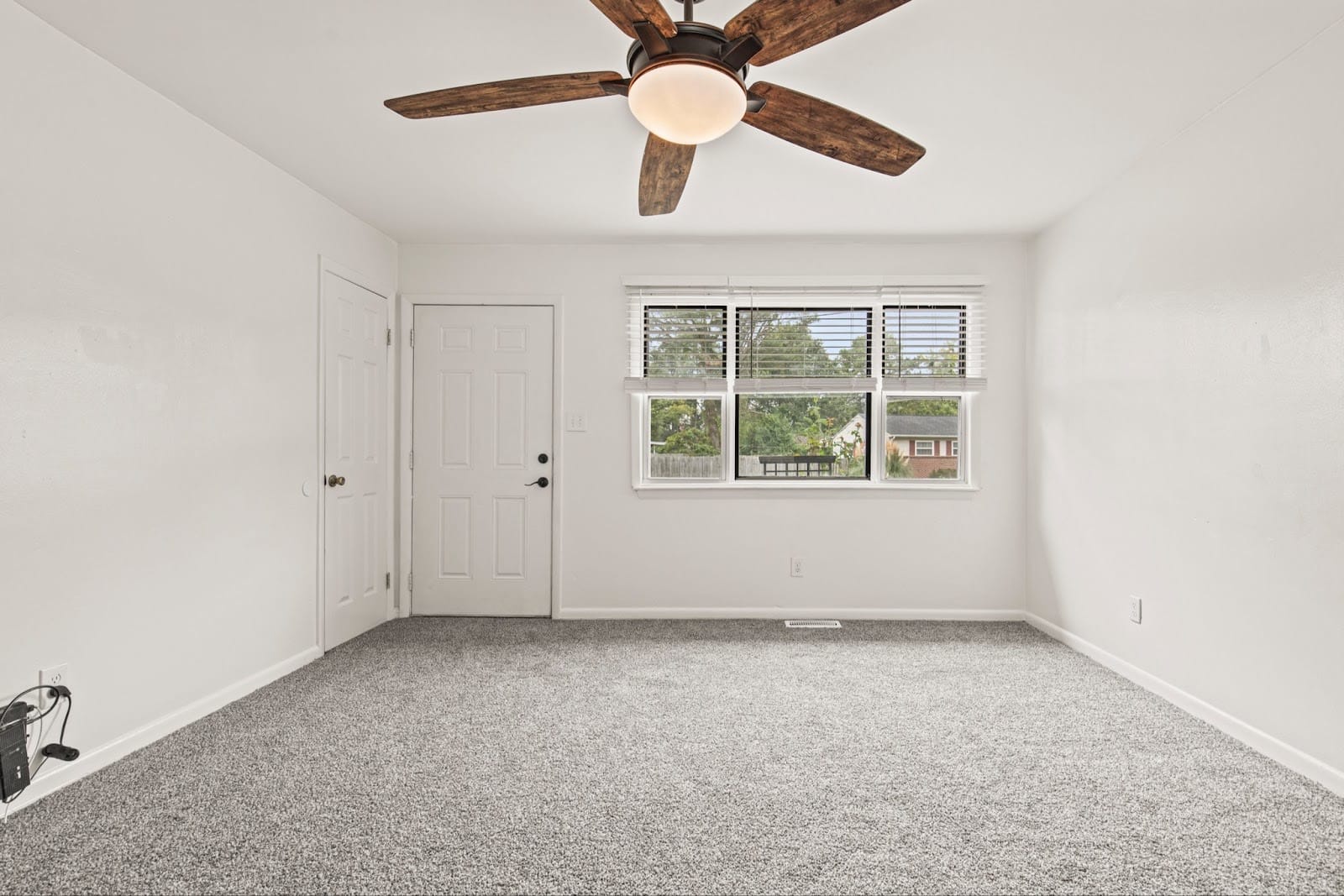
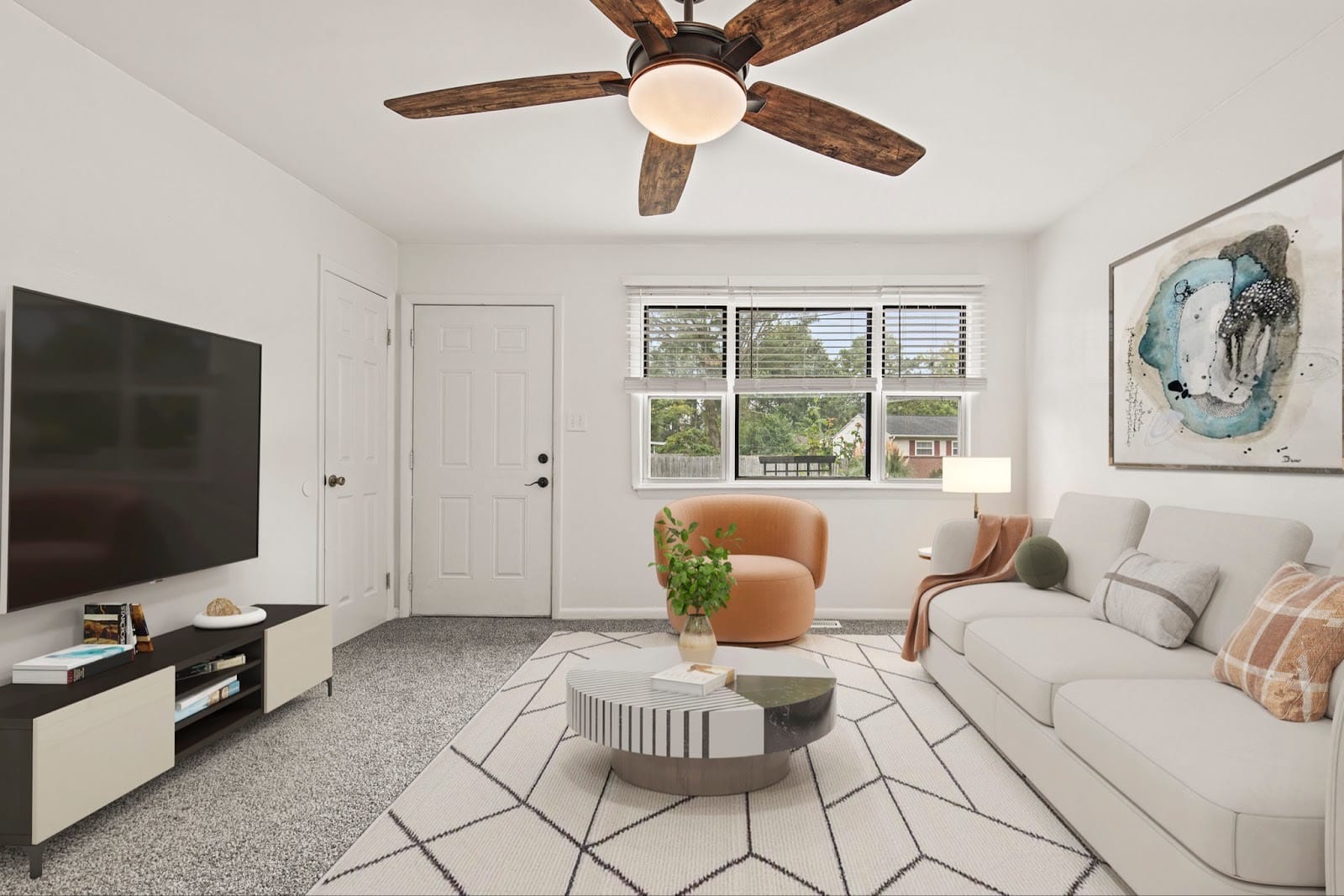
(a little tip: if you don’t like your house or if you have friends that will let you practice in their house but it’s not necessarily “portfolio” vibes.. You can get an editor to clear a room, and then stage it.)
This is an example of a staged room. Pixlmob.com.
2. Ask Friends & Family If You Can Photograph Their Homes
Most people love when their home looks “magazine-worthy” — and you can use these shoots to build your portfolio.
Offer something like:
“I’m practicing real estate photography and building my portfolio — can I take some photos of your home this week? It’ll take about an hour and you can keep the photos.”
Focus on people with:
- Nice natural light
- Clean, clutter-free spaces
- Updated kitchens or bathrooms
- Cozy, lived-in rooms with character
Even 3–5 homes will give you solid variety.
3. Shoot Builder Model Homes
Builders LOVE showing off their floor plans. Many allow photographers to quietly shoot their already staged, beautiful, bright model homes as long as you’re respectful.
Tips:
- Go on weekdays when it’s quiet
- Let the person at the desk know you’re practicing photography
- Stick to public viewing areas only
- Don’t rearrange or move items
- Tag the builder on social when you post — they may share your content
Model homes are one of the fastest ways to get stunning portfolio material.
4. Find Airbnb Owners Who Need Free Content
Airbnb hosts constantly need:
- Updated listing photos
- Seasonal photos
- Lifestyle images
- Detail shots
- Exterior photos
Send a simple DM:
“Hi! I’m building my real estate photography portfolio and I’d love to photograph your Airbnb for free in exchange for letting me use the images. Would you be open to that?”
This instantly elevates your portfolio because Airbnbs are often designed to be photogenic.
5. Visit Open Houses (When Permitted)
Some agents will happily allow you to shoot during an open house as long as you ask first.
Try this script:
“Hi, I’m practicing real estate photography — would you mind if I take a few shots of the main rooms? I’ll stay out of the way.”
If they say yes, you get:
- A staged home
- Great lighting
- Zero cost
- A chance to network naturally
- Potential clients who now see your professionalism
6. Create Before/After Reels or TikToks While You Practice
This is where you stand out.
Record:
- You walking into the house
- You setting up your camera
- You adjusting your tripod
- Your composition decisions
- Your editing process
- Your before/after transformations
Agents LOVE seeing your eye, your process, and your attention to detail.
Doing this consistently = free marketing.
7. Practice On “Difficult” Rooms Too
Clients need photographers who can handle:
- Small rooms
- Dark rooms
- Bathrooms
- Spaces with mixed light
- Tight hallways
- Busy kitchens
If you can make these look good, you’ll instantly stand out.
Use your own home for this — even shooting a tiny bathroom teaches you valuable skills.
8. Build a Portfolio Page with Variety
Your portfolio should show:
- Kitchens
- Bathrooms
- Living rooms
- Bedrooms
- Exteriors
- Drone shots (if you have a drone)
- Twilight photos (you can fake a few in Lightroom)
- Detail shots (fixtures, textures, small decor moments)
Don’t wait for perfection to publish your portfolio — you can always refine it as you go.
9. Create a 'Practice Map' for Yourself
Make a simple list of all the locations you can practice shooting over the next 30 days:
- Your home
- Your mom’s home
- In-laws
- Friends
- Airbnb
- Builder models
- Open houses
- Your favorite local coffee shop (ask permission!)
- Your neighborhood clubhouse
A 30-day practice schedule builds skill and confidence quickly.
10. Remember: Agents Care More About Consistency Than Expensive Gear
You don’t need:
✗ A $3,000 camera✗ A $2,000 lens✗ A huge portfolio✗ Years of experience
You do need:
✓ Clean, consistent photos✓ Straight lines✓ Bright, evenly lit rooms✓ True-to-life colors✓ A simple, easy experience for clients✓ Fast turnaround time✓ Professional communication
Those things matter 100x more — and you can master all of them without a single paying client.
Final Thoughts: Start Before You’re Ready
If you wait for clients to show up before you practice, you’ll feel stuck for months.
If you practice first and build a strong portfolio, clients come fast—because people can see your skill before they hire you.
Start where you are.Use the homes around you.Show your process online.And watch the momentum build.